Friday, September 4, 2015

Is This The One?

Every one of us has that “aha” moment once in a while. You know, when you get so excited over an idea that you feel like that lightbulb above your head is about to explode!

   Your heart is pumping hard, you can’t even focus, and all you can think of is that idea. But, how do we know that this is the one?

   How do we know if this is the one that will work? The one that will give us the financial rewards? The one that gives us the personal satisfaction? That it is not, in fact, the one that’ll wipe out your saving, that will break a marriage and give you a heart attack?

   Before we start jumping into the great idea journey, check if your idea passes the checklist below:

It Refuses To Die

   Before you start, list out all the things that may make your idea seem like a bad one and then run through them one by one to see if it will survive the test. The more challenges and questions you put your ideas through, the more resilient it will become.

   If the idea manages to stand tall after this test, congratulations!

   You are potentially staring at a billion dollar idea in your hand. Also, share it with your friends and families and get as much feedback as possible to make the idea stronger.

Passion

   If you are pursuing this idea solely for money, please stop right now. Of course, you might make a good start of it, but let me tell you this: It won’t last.

   You need to be passionate about it. You must believe in it so much so that you are even willing to work for free to see the idea take wings. You need it to pass through the dark times in the journey of entrepreneurship.

Simplicity

   Every great idea starts with something simple. It addresses one problem, with one product for one type of customer.

   Mark Zuckerberg started Facebook to help his college-mates to keep in touch with each other. He had no idea how big his idea would grow to be. The simplicity and clarity of the idea made millions of people use it every day.

Original Secret Sauce

   The idea must be original and better than the existing solution. At least it must be new to the market that you are entering.

   Customers can smell a fake or “wannabe” from far away, and they would absolutely hate it. This is how Coca-Cola has managed to stand tall through the years. Pepsi has been trying to overtake Coca-Cola with its lavish marketing spending but has not really succeeded. To this day, the complete ingredients for Coca-Cola remains intact, a secret.

Meet Your Customers’ Need

   The single most important reason your business exists is that it is able to address the customers’ needs. Think about the one single reason your business exists.

   If you don’t have one, you are merely shooting in the dark hoping to hit the target. This directionless effort will drain your resources, and you might be heading for failure. This holds true even if your goal is just flipping burgers. It will drain your resources, and you will be heading towards failure.

   Kaw-Kaw Burger, for example, has a great understanding of their customers’ wants. They found the sweet spot of local palatte that makes their customers line up for hours for their burgers.

Sufficiently Large Market

   Whether you’re making sales worth RM1mil or RM10,000, you expand a similar amount of effort and resources.

   You still need to advertise your service, call for appointment, meet up with your client, negotiate the deal and secure the sales. If the market you are providing the solution for is too small, create this solution in the first place. Your journey to the top would be a long and painful one.

One Revenue Stream

   You just need one great idea, at least in the infant stage. It allows the team to focus and take full advantage of its potentials.

   It is a huge challenge for a startup to prioritise its resources when the resources available is meagre. French bakers know this concept very well. They only bake a few types of bread but they make sure to do it very well. People say that there are no bad ideas, just bad decisions. I’d say that’s true – it’s the combination of great ideas and good decisions that makes it work.

Sunday, April 26, 2015

How To Get Your Colleagues To Respect You


R-E-S-P-E-C-T: It's something that we all aim to earn in our workplace. Sure, it's nice to be liked and to be able to make lots of friends. But when it comes to your career, being respected will help you to progress and develop professionally.

Here's how to gain respect from your colleagues:

  1. Do Your Job and Do It Well

    This might sound obvious, but turning up every day to your job and doing great work will get you noticed for your professional abilities quicker than any other social technique you can employ. There will always be personality clashes in any workplace, but even if your co-workers don't like you on a personal level, they won't be able to fault you for your work ethic and and skills if you make sure your work is delivered at a consistently high standard.

  2. Positive Attitude

    No matter what the task is that you're being asked to complete, never respond with "that's not my job" or refuse to help someone (unless they're doing something dangerous or illegal, of course). Always appear happy to do whatever assignment you're given, with a positive demeanour. This will show that you're happy and willing to work as hard as anyone else in the business.

  3. Reliability

    If your colleagues know they can rely on you, they're more likely to trust you with special projects, promotions or more responsibility. You can demonstrate how reliable you are by always being on time for meetings and never making people wait for you. Don't leave work every day at 5pm on-the-dot, and if you're going to be late or if you need an extension on a deadline, be honest and transparent with your colleagues. Help manage their expectations by telling them when and why you need more time to complete something – it happens to everyone.

  4. Listen

    On top of getting a better understanding of concepts that others might know better than you, this will also help you get to know people better. It will help you to find common ground to build relationships upon, and also to identify when others are calm and can be called on for support, or stressed and needing help.

  5. Help Others

    Offering to help other people will definitely show that you are a respectable person. Plus if you're willing to do some favours for your colleagues, they might be inclined to reciprocate and help you in return when you need it. Rather than always vaguely asking if people would like some help, try anticipating their needs by suggesting specific ways that you can assist – this will show that you're intuitive of the needs of people around you and that you have an understanding of your broader team's purpose and importance within the business.

  6. Avoid Office Drama and Gossip

        This one is simple. Don't get involved in any unnecessary bickering or gossip in your workplace. It rarely ends well, so side-step all of the hoopla and focus on building a great reputation for your skill and productivity rather than choosing sides in gossip stories.

  7. Be Inclusive

    You can show that you have real leadership potential if you can encourage a group of people to participate in a team activity. Showing that you can make everyone feel included and comfortable in a group environment will help you display a real understanding of empathy and interpersonal communication skills. So invite everyone to have lunch together sometime, or lead a brain-storming session and show that you make sure everyone feels involved.

  8. Say "Thank You"

    This one is so easy you can start doing it right now. Say "thank you". It's simple. If people feel as though you appreciate them, they will respect you more. Don't limit your gratitude to times when a workmate helps you out with a project – let them know you appreciate the small things they do that make your day more pleasant.

  9. Never Gloat

    There's nothing less graceful than a person who wanders the office floor loudly singing their own praises. If you've achieved something that you're really proud of, let people know about it by including them in the experience. Try thanking the team that helped you reach your goal, and the compliments and congratulations will undoubtedly start flowing. But if you take to a loudspeaker to tell everyone how great you are, we can't guarantee that they'll celebrate you as much as you're celebrating yourself. – www.thenakedceo.com


Monday, March 16, 2015

Top 10 Things To Look Out For In A Condo

extracted from “The Star” dated 3rd January 2015

With property prices going sky high in recent years, many people are struggling to buy their first property.

   Gen-Y who is currently the generation looking to purchase their first property are often seen in showrooms around the Klang Valley over the weekends. However, not many know what determines a good buy. While there are books available, the knowledge given is often too general and perhaps, not applicable locally. A lack of knowledge and misleading information can lead to painful mistakes.

  As MCT group of companies executive director Datuk Danny Goh says, “Any property development – good or bad, can be sold. It is the property buyer who suffers at the end of the day.”

   As landed properties are out of reach for most young adults, condominiums are the way to go. This is evident with the number of studios and integrated developments comprising high-rise buildings mushrooming around the Klang Valley.

   What are the specific criteria that truly determine a good condominium? As properties don’t come cheap, homework is important so that you avoid a painful lesson.

   “I am familiar with all property developments in the Klang Valley,” says Goh. “Property is my passion and I have spent years analysing property and I know what makes good property. It is all merely logic.”

   Indeed, many people depend on guesswork and a hunch when buying a condominium. Few know what is truly a good buy these days. Here are the criteria you need to look out for to ensure a solid investment.

1. Attractive facade

   Just like first impressions count in people, so does property. You must be impressed at first glance. An attractive facade with elements of luxury and a classy design gives an immediate positive feeling. If you have to convince yourself when looking at a facade for the first time, imagine how a future buyer will feel when you wish to sell it off one day. In property, good looks count.

2. A grand entrance and lobby

   Good looks must follow through. High-end condominiums are not the only ones today that come with a grand entrance and lobby. These days, everyone wants to live well. A grand entrance and lobby add tremendous intrinsic and extrinsic value to a condominium and gives residents a sense that the developer cares and respects their buyers.

3.   Excellent parking space design

   Are cars a hassle to park? Are corners too narrow and are the walls filled with bumps from accidents? Parking spots must be properly designed for the convenience of residents. Some older condos use a multi-storey or a spiral multi-storey carpark. This is not the best choice, simply because it is a daily discomfort for the driver. A basement carpark is more preferable, and the parking space has to be designed to allow for wide turning.

   Each car park should measure 3.5m(height) and 2.5m by 5m for comfortable parking. With this size, even a small lorry can park.

   But all the ease in parking won’t matter if the parking area is not brightly lit. The parking area must look and feel safe enough for residents to walk about at night. An eerie parking space eats into the safety factor and pulls down investment value.

4.   Sunny and luxurious elevators and lobby

   If you feel afraid riding in an elevator, chances are you won’t be keen to live there. That’s why elevators must be designed with care. While some developers take on the standard design, a well-designed elevator with a more expensive look, perhaps even a hotel design, will go a long way in giving comfort to the resident. The elevator must be spacious so many can enter at a go and it has to be well maintained.

   A see-through elevator is preferable, as this means added security, especially for the lone person riding it at night. There is no sense of being alone as the outside can see inside. Even if the ride is long, the resident is able to enjoy views rather than look at the steely walls of an old lift.

   The lobby in which the resident waits for the elevator is of equal importance. If the lobby is dim and lonely in design, even a minute’s wait feels like a long time. However, with a nice and bright lobby, residents won’t have issues waiting even for five minutes.

5.   Wide and comfortable corridors

   Dark corridors, narrow stretches and a lonely feel are no-nos. Today’s condominium corridors must be wide, preferably with plenty of lighting and ventilation. There mustn’t be a dark and dank feel. Residents must be comfortable walking through it whatever the time of day.

6.   Practical layout design

    You may not notice it, but the best condominiums in town do not stinge on land. Tower to tower distance must be at least 120 ft apart. Towers which are too close to give a feeling of high density and claustrophobia. It also looks slightly more barrack-like and less prestigious. Look out also for the air-conditioning compressor. A well thought-out condominium will keep unsightly contraptions out of sight.

7.   Practical facilities and big open spaces

   When a condominium development has big open spaces, value is enhanced. Condominium land is typically small, and to enhance space, a basement car park is a must. However, the cost of building a basement carpark is high and often developers shy away from it.

   “The footprint of the building versus the land should be about 30%,” says Goh. “The open spaces should be reserved for jogging and cycling tracks. Open spaces are a contrast to the tall buildings and this gives far more enjoyment to residents. If the footprint percentage is too high, it becomes too dense and it’s hard for the resident to relax and enjoy.”

   Look at the master floorplan of the whole development to gauge the percentage.

8.   Sufficient parking ratio

   The next time you go on a showroom or visit a property exhibition, ask the salesperson how many parking bays the property has. There must be enough parking space for the residents. Take the assumption that every resident has two cars and do the math. If a condominium has 800 units – it must have more than 1,600 parking bays as visitors have to be catered to as well. Assuming it has 1,300 (and that is very likely) that’s not a good sign.

   Residents are unaware that once parking availability is inadequate, problems arise. A look around some existing condominiums is proof. Residents will be forced to park outside – often far away, and jam up the entrance. This equates to bad traffic and poorer  security once the number of residents increases.

9.   Reasonable maintenance fees and the promise of continuous good maintenance well into the future

   When most people buy a condominium, they often hope the number of units is low and equally the maintenance fees. However, this is not the best scenario.

   “Maintenance fees are very important because maintaining a condominium is very costly,” says Goh. “If the fees are too low and the number of units is low, there won’t be sufficient funds to maintain the development. A condominium which isn’t well-maintained clearly goes down in value. Wth low maintenance fees, you need the economies-of-scale to back it up. I recommend looking at a development with a minimum of 1000 units.”

10.   Unit must be semi-furnished upon vacant possession (VP)

   When a resident moves in, he must be able to switch on the lights and move in immediately. The developer should build a condominium where the main fixtures like lighting, cabinetry and kitchen appliances are all ready.

   “For condominiums to sell today, they must be semi-furnished,” says Goh. “From my research, a condominium takes about two to five years before it becomes well-inhibited. This is too long and discouraging for those who want to stay in a thriving development. Often the long process is caused by the renovation works and looking for a designer and contractor. Busy people don’t have the time, and that is why units remain vacant for a long time.”

   It’s also common for people to exceed their renovation budget. RM40,000 can become RM100,000 and the result is more stress. When the developer takes away this headache by including the main fixtures, it benefits both developer and resident greatly.

   If a condominium is not semi-furnished, residents will have to put up with renovation works by others every few months. Dusty, noisy and unsafe.

   When a condominium is semi-furnished, people move in faster and majority of renovation works are cut down.

Sunday, January 4, 2015

Top 10 Christmas Tradition Origins

extracted from The Star – 13 December 2014

1. Christmas Trees

Decorating evergreen trees during the winter solstice pre-dates Christianity in Europe, but the modern Christmas tree is widely believed to have originated from 16th century Germany. Early trees were decorated with edibles such as apples, nuts and pastries, but these were replaced with glass baubles and tinsel garlands over time.

   Martin Luther, a theologian and Catholic priest from 16th-century Germany, is widely believed to have been the first person to put lit candles on a Christmas tree – a  predecessor to modern Christmas tree lights.

2. Santa Claus

The figure of Santa Claus is largely inspired by the legend of Saint Nicholas. Saint Nicholas was a 4th century Greek bishop of Myra (modern-day Demre, Turkey), known for secretly giving gifts of coins to the poor.

   However, the modern image of Santa Claus as a jolly man clad in red is largely influenced by the famous 1823 poem A Visit From St Nicholas (“T’was The Night Before Christmas”) by American professor Clement Clarke Moore.

3. Christmas Stockings

There are no written records on how the tradition of leaving small gifts in sock-shaped bags started, but some attribute this to one of the legends of Saint Nicholas.

   Saint Nicholas was passing through a village where lived an old man who did not have enough money to get his three daughters married.

   Deciding to help in secret, Saint Nicholas came at night and three three bags of gold through an open window, one of which landed in a stocking that was hung over a fire place to dry.

4. Christmas Presents

Nobody knows exactly how the exchanging gifts came to be associated with Christmas, but historians have proposed several theories.

   Some believe this could be a leftover tradition from the ancient Roman festival of Saturnalia that was celebrated on Dec 25 prior to the founding of Christianity.

   Others have associated the tradition of gift-giving to the Three Wise Men who brought gifts to the newborn Jesus in the nativity story.

   However, it is also believed that Moore’s famous poem may have encouraged this tradition in modern times.


5. Christmas Meals

When it comes to Christmas dinners, a whole roasted turkey is one dish most highly associated with the holiday.

   Eating the turkey as a Christmas staple only became trendy in England from the 16th century onwards.

   A traditional Christmas dinner in different parts of the world would have dishes that reflect each individual culture, so it is perfectly acceptable to serve your roast turkey or shepherd’s pie in addition to devil’s curry or chicken murtabak in Malaysia.

6. Carolling

Like in many religions and cultures, music is intrinsic to Christianity, and Christmas carols are regularly sung in church and for worship when the season comes around.

   However, the act of door-to-door carolling may have originated from an ancient Anglo-Saxon winter solstice tradition known as “wassailing” in which people visited homes and orchards to sing songs to convey wishes of good health and good harvest to the owner.

7. Candy Canes

Folklore in Germany tells the tale of the choirmaster of Cologne Cathedral who, in 1670, sought the help of a local candy maker to make sweet sticks to be handed out to children in order to keep them quiet while the nativity play was performed on Christmas Eve.

   The sweet sticks were made to resemble a shepherd’s crook, just like that used by the shepherds in the nativity story.

   There is no historical evidence to suggest this was how candy canes started, but they are strikingly similar to a Swedish straight candy cane known as polkagris.

8. Twelve Days of Christmas

More than just a popular 18th century English Christmas carol, the 12 days of Christmas hold actual religious significance as Christmas is celebrated over 12 days until Jan 6 (Jan 5 in some places), which is the Christian Feast of The Epiphany.

   Epiphany celebrates the visit of the Three Wise Men to the infant Jesus, signifying the revelation of Jesus as a divine figure.

   Some cultures observe the practice of the 12th day being the last day to take down Christmas decorations. 

9. Yuletide

Often we hear the word “yuletide” being mentioned in a few secular Christmas carols, but only a few know that it is a pre-Christian pagan religious festival celebrated during the winter solstice.

   Originally observed by the Germanic people of central and northern Europe, a few of its customs persisted over time and were later absorbed into Christian tradition as it became the dominant religion; the most notable being carolling and the serving of cured or smoked ham.

10. The Spirit of Christmas

Christmas was not always known as a time for family and goodwill. Early Christmas celebrations, especially in England, were a time of excessive eating, drunkenness and all forms of adult merriment.

   The situation got so bad that religious extremists outright banned the celebration for a few years, following their victory in the English Civil War in the mid-17th century.

   The idea of “the spirit of Christmas” as a positive sentiment was later revived and partly influenced by the famous Charles Dickens novel,  A Christmas Carol in 1843.

Monday, October 6, 2014

How to Work Smarter

Extracted from “The Star” dated 5th August 2014

Minimise Checking Email

Nearly everyone is addicted to email and most business people barely spend more than 30 minutes away from their mailbox. The challenge lies in what’s waiting for you when you read your emails, including trying to solve everyone’s difficulties. Your most pressing tasks are forced to take a back seat when you do this. I recommend looking through your task list in the morning and resolving to tackle one key task before looking into your emails.

Even if you do check your mailbox, limit it to two or three times a day to ensure that you spend most of your time executing instead of scanning through emails, Facebook and Twitter, which take up a chunk of your time.

Spam Stock Image


Isolate Yourself Regularly

As an entrepreneur, you are constantly surrounded by people, be they your colleagues, your business partners or even clients, which means you barely have time to reflect and analyse situations.

Reflection time is extremely important because it can determine if you can bring the business to the next level or keep running in that hamster wheel and fighting fires every day.

Every two weeks, take time to be quiet and without any disturbance to focus on growing your business to the next level through reflection.


Surround Yourself With Smarter People

The reality is you will never have all the answers. Also, there is someone out there who has all the answers that you are seeking. Therefore, it is important to surround yourself with an assortment of people who are smarter and wiser than you to inspire and provide new perspectives on your current situations and challenges.

If you are the smartest person in that room, then it is time to change rooms.

Smart business people Stock Images

Try New Experiences

Creativity is a core element of success in business because every company is so similar in their deliverables and promises. Hence, every company should focus on differentiating itself from the rest by injecting one or two unique elements into its offerings.

How does one cultivate creativity in order to conceptualise this? By constantly putting oneself through new experiences that force the mind to learn different types of knowledge and form new connections that help us view reality a bit differently.

New experience road sign illustration design Royalty Free Stock Photo

Embrace Failure

Innovation and failure are often closely related because not all experiments will turn out to be successful and innovations only occurs with frequent trials. In Asia, failure is often discouraged, hence many business owners end up maintaining their current business for many years because they fear entering a new market, expanding a line or changing their current clientele.

However, big achievements are seldom attained with low risk, hence to move ahead faster, failure should be part of the equation to encourage multiple experiments into the unknown. However, the possible repercussion (or loss) should always allow the business owner to regain his footing if it does not take off. The risk should be manageable in the worst case scenario.

Every business owner should attempt to work smarter because everyone has the same hours in their day and the goal is to evolve faster than your competitors. With these five steps, you will be able to leapfrog your competitors by competing against them in unexpected ways.

Future Vs Past Embrace Change Win Race Stuck Behind Stock Photo


Etiquette Rules

Extracted from “The Star” dated 8th July 2014

Here are some tips on social and business etiquette

DO’s

  1. Always five proper handshake, because it shows confidence. It should be a firm grip – not too weak, but not too strong either. You gotta get it just right.
  2. When you walk into an interview, introduce yourself with your first and last name. Don’t ever just say “hi”.
  3. Prepare for the “three weaknesses and strengths” question because most of the time, people are only prepared to talk about their strengths.
  4. At a social event, always hold your drink in your left hand – even if you’re a left-hander – because you don’t want to have a wet palm during a handshake.
  5. If you’re an introvert at a party, approach a group of four to five people. That way, you wouldn’t have as much pressure to contribute to the conversation.

DON’Ts

  1. At a lunch interview (or any other event, for that matter), do not add seasoning to your food before tasting it, because that shows you’re someone who makes rash decisions before trying things out.
  2. Always practice common courtesy in a work environment. If you’re in an office elevator, for example, don’t just fiddle with your phone or ignore someone yelling for you to hold the door. He/she just might be the interviewer or future boss!
  3. If you receive a call from an unknown number, again, don’t just say “hi”. Answer by mentioning your first and last name because you’d never know if it’s for a phone interview.
  4. Do not ask about your salary package at an interview, because it shows you’re unprepared. Market rates are available online, so do your research. Wait until they show they’re interested in hiring, then you can negotiate your pay if you want.
  5. Avoid wearing red for interviews because it shows power and strength. That intimidates interviewers, who might subconsciously become reluctant to hire you in case you end up being competition for them. Go with neutral colours like blue or grey. And girls – no sky-high heels. One to three inches is fine, and they must be closed-toe shoes.


Monday, August 18, 2014

5 WAYS TO LOVE YOUR CO-WORKERS

Extracted from The Star – 26th July 2014

In a survey by benchmark recruit 2013, it was found that 19.35% of employees leave their company due to feeling unappreciated. This in itself is a great signal to every one of us in the office.

Appreciation is an important part of work life, and a key characteristic of every good leader is the ability to appreciate his or her colleagues.

In their book The 5 Languages of Appreciation in the Workplace, Gary Chapman and Paul White talk about the five basic ways to express appreciation:

1. WORDS OF AFFIRMATION

2. ACTS OF SERVICE

3. RECEIVING GIFTS

4. QUALITY TIME

5. PHYSICAL TOUCH

There are many lessons that we can bring to our relationships with our colleagues. As everyone speaks a different “language”, it may be difficult to identify who speaks what lingo.

Taking an online test together as a team can not only help you understand each other, but it also serves as a fun team activity.

However, as it is understandably difficult to do so if you are in a large team, here are a few ways to identify the love languages of your colleagues, and how to speak it.

1. WORDS OF AFFIRMATION

Happy businesswoman doing a thumbs up 6164709

Usually appreciated by extroverts, complimenting and acknowledging the hard working employees in the office can really give them a much needed motivation boost.

In the workplace, words of affirmation are best given in groups. Praising your colleague in front of others make them feel important, as their work would be recognised by others as well.

2. ACTS OF SERVICE

Teamwork 6749234

Work mates who speak this language tend to be the ones who slave away at their table, trying to finish as much work as possible to help. Most of the time, these are the employees who never seem to not be working.

Late night at the office for one of your team mates? Appreciate them by asking if you can help take on some of their tasks. If you are already full on your workload, offering to buy dinner for them can go a long way as well.

3. GIFTS

santa claus hat with red christmas gift box 10789353

This is the colleague who leaves presents at your table to surprise you every once in a while. Chocolates, sweets, or even little notes, their appreciation for you shines through that cocoa covered almond waiting on your desk.

Take heed of the saying, “do unto others as you would have them do unto you,” and in return, shower them with appreciation by doing the same! Buy them a cup of coffee on long days, or even a snack in the middle of their work.

4. QUALITY TIME

man's watch with a leather belt isolated 9835318

There is always one person in the office who wants to bring everyone out for lunch, and is willing to wait for others to finish their work first.

To this group of people, show appreciation by stopping by their desks every once in a while to spend a few minutes catching up with them. Going out of your way to speak to them shows that your care and are thoughtful.

5. PHYSICAL TOUCH

10642718

Saving this as the last, in this context, also the least, physical touch is not normally used as a form of appreciation in the workplace.

The reason is obvious, as there are certain limits in our workplace relationships, and crossing such limits is inappropriate for professional settings.

Nonetheless, certain actions such as high fives and pats on the back can still be a great form of recognition towards your colleagues.


If you are familiar with Chapman’s book, The 5 Love Languages, this article may ring a bell. However, it is also mentioned to not mistake the two “dialects”, as our primary love language in our personal relationships is usually not the same as our language of appreciation in the workplace.

Keeping all of the above in mind, let’s show appreciation in our workplace, and go the extra mile by speaking it in the language of those around us. As you appreciate your colleagues, you will be in turn appreciated!

Sunday, February 23, 2014

Laugh Out Loud

Extracted from “The Star – 22nd February 2014”

Ode to David Moyes

UNITED is red, Everton is blue

Ever since you joined us, we’ve become poo

Watching you move from blunder to blunder

How we sink so low, I wonder

You’ve turned the champions into a team of fools

Whoever watches us play, snoozes and drools

How you got the job, I don’t know

But you’ve got to accept it’s time for you to go

You’ll never be like Fergie, no matter how hard you try

So for the love of God, David, please say goodbye


Monetary comfort

MONEY can’t buy you happiness but it’s more comfortable to cry in a Mercedes than on a bicycle.

Money hands

 Pirate parts

A PIRATE walks into a bar.

Bartender: “Hey, I haven’t seen you in a while. What happened? You’re a mess!”

Pirate: “What do you mean? I’m fine.”

Bartender: “What’s with the wooden leg? You didn’t have that before.”

Pirate: “Well, we were in a sea battle and a cannon ball smashed my leg. But now it’s patched up. I’m fine, really.”

Bartender: “What about the hook? Last time I saw you, you had both hands.”

Pirate: “Well, we were in another battle and I was in a sword fight. My hand got cut off. But I’ve been fitted with this hook, and I feel great, really.”

Bartender: “ What about the eye patch then? Last time you were in here, you had both eyes.”

Pirate: “Well, one day out at sea, some gulls were flying over us. I looked up, and one of them shat in my eye.”

Bartender: “So what happened? You couldn’t have lost an eye just from bird shit.”

Pirate: “Well, I wasn’t used to the hook et, you see.”

Pirate Skull

Forgive, not forget

FORGIVE your enemy but remember the bastard’s name.

Drinking problem

ALCOHOL does not solve drinking problems but neither does milk.

Bottles and glasses of alcohol drinks

Same time

A NEW study finds that a woman’s “I’ll be ready in five minutes” is exactly the same as a man’s “I’ll be home in five minutes.”

Tell me why

If we are not meant to have midnight snacks, then why is there a light in the fridge?

The hand drawing question WHY

Chinese carnivores

If Adam and Eve had been Chinese, we would still be in Paradise because they would have eaten the snake instead of the apple.

Fun zoo. Snake

Helping hand

HELP someone when they are in trouble and they will remember you when they are in trouble again.

Helping hand

Simple breaststroke

A BLONDE, a redhead and a brunette are in a river breaststroke swimming competition.

The redhead wins and the brunette comes in second. But there is no sign of the blonde.

Hours go by and the people are worried.

Just as everyone is losing hope, the blonde is finally seen.

She clambers onto the riverbank and goes straight to the judge: “I have a complaint. Those two girls used their arms.”

Breaststroke

Wednesday, February 12, 2014

STRIDE OUT IN STYLE

Extracted from “The Star” dated 11 February, 2014

As a young adult, looking good is of paramount importance. Putting your best foot forward and having a sharp outfit go far in drawing attention and showing people you mean business.

   Often, having a nice wardrobe is associated with needing lots of money. But not all of us have deep pockets. We need time to get there. How do we deal with it then, in the interim? After all, women want to look smart, polished and chic. It gives us confidence.

   Figuring out stylish work outfits can be difficult, and it can be even more difficult if your budget is small. However, with some creative styling, smart accessorising and knowledge of how you’d like to be perceived, a stylish yet affordable work outfit is easy to put together.

   You’ll be surprised at how a simple dress can make one look elegant and attractive. It is even better if your office wear can double as a casual outfit; that’s value for money.

   Online fashion store Whitesoot co-founder Estee Chong, 27, feels that dressing up at the workplace is important. “It’s not trivial at all. Dressing has become the unspoken factor in measuring a person’s competitiveness. Sales people understand this best and we see this often in insurance agents and sales people. They realise that dressing up is just as important as product knowledge.”

   Here are five tips on how you can look stylish in the office:

Tip 1: Go bold

   Bright and strong colours exude confidence. Sometimes it doesn’t hurt to stand out and make an impression. “I find that each time I wear a red dress, no matter how simple it is, I get a lot of male attention, from the taxi driver to my colleague,” says advertising executive Lisa Tan, 26.

Girl trying dress

   Male attention is one thing, but if you have a boardroom meeting or a deal to seal, wearing a bold dress helps. Look at the powerful women and the clothes they choose when they go on stage. It is never white or a weak brown. It is often a strong and striking colour. Time to go bold, ladies.

Tip 2: Accent up

   We understand that not every woman enjoys bright colours. No problem. For the colour-averse, there is a way to keep monochrome style interesting. A beautiful monotone blouse tucked into a black pencil skirt is a classic look, but take it up a notch by adding a brooch, a statement necklace or an accent detail. You’ll be amazed at the marked difference this little accent makes. You go from plain to wow in a second. If you worry about your ability to pair your clothes and accessories, purchase pieces which come with in-built accents. You must have seen blouses with pearl embellishments or gold studs on the collar making waves in recent months. These are wonderful pieces to buy because they give you instant style. For example, a long-sleeved button-down blouse with pearl embellishment on the collar makes an extraordinary work wear piece. So accent up and go wow.

Portrait of young woman in colorful blouse

Tip 3: Power dress

   The power of a dress is simply undeniable. It is also the easiest way to look stylish if you aren’t confident about putting together clothes. We recommend a chic dress that shows off your curves even if you aren’t the typical size 6. A power dress brings out the womanliness and beauty in you. The importance of a good dress cannot be emphasised more. A power dress looks good even without a blazer. Whether it’s the colour or its elongating effect, the right dress can empower you to go the distance in your workplace.

Office lady holding suit

Tip 4: Belt it

   Just like a necklace can do wonders to a plain dress, so can a belt. A belt can flatter your figure by creating an hourglass shape and add personality to your dress. You can knot it to give a twist to a flowsy dress, or use it to further enhance a ladylike look. If you are wearing a plain dress, a totally different belt colour can add pop and style to it. For slimming effects, choose a narrow belt in the same colour as the dress.

Belt and dress on a mannequin

Tip 5: Forget jeans, go for pants and skirts

   What? This seemingly obvious tip is however lost to many. When a company announces casual Fridays, women dive their into their jeans and don’t seem to come out from it. Be the rebel and show off your pretty clothes, normally deemed casual for workdays. Go for coloured pants, flouncy skirts or even skater dresses.

Red women skirt

   These are refreshing and youthful choices that surprisingly many working women stay away from.

Wednesday, December 18, 2013

Get A Life

Extracted from “The Star – 15 October 2013”

Here are 10 tips to help you achieve a work-life balance.

balance-life-work-harmony-scales-29467905

1. Adjust your perspective of work

   Most of us think of work as, well, work. However, sometimes switching your point of view to a less bleak perspective is all it takes to get us motivated again. Visualise how your small contribution in the office can create harmony in the bigger picture. The work that you’re doing now is part of the long-term plan to achieve your goals in life.

2. Utilise your leave days

   Some workers prefer not to claim leave days because they have nothing planned. Accumulating leave may seem like a good idea at first, but most companies have a “use by” date so they either end up being wasted or have to be utilised at an inconvenient time. Take a day off to travel, bring your folks out for lunch or just to sleep in! Take a break.

3. Talk to people at work and outside of work

   Nurture relationships wherever you are. Build friendships so that there won’t be any dissension or jealousy in the workplace. In the meantime, make the effort to properly connect with loved ones when at home. Spend quality time and have quality conversations with your family members to ensure that they don’t feel disengaged from you. That will also help them to be more understanding when you go through stressful periods at work.

4. Have a bit of fun everyday

have-fun-spelled-out-22931702

   Schedule happy activities such as a weekly futsal session or a coffee meet up with a friend during the weeknights. Such activities rejuvenate you after a long day. Definitely a cure for weekend withdrawal symptoms.

5. Understand the difference between “urgent” and “important”

   As much as we try to control them, certain circumstances will require us to disregard the whole concept of segregating work and home. In those cases, try to identify which errands require your attention now (these matters are “urgent”) versus which things carry weight but are not pressing (these are “important”). Matters which are both “urgent” and “important” will be the ones you need to attend to first.

6. Get enough sleep

sleeping-brother-sister-teenage-boy-his-little-together-bed-babysitting-concept-34809662

   We can’t change the fact that work begins at usually 9am, so avoid being nocturnal. Ensure that you get your regular seven hours of sleep every night so that you don’t feel sluggish before 11am. This will also help you make full use of your time in the office, thus reducing the need to work past office hours.

7. Allocate time for exercise

exercise-gym-center-22586233

   Don’t underestimate the power of exercise. It’s not just about getting in shape, but also maintaining health, improving mental acuity and self-esteem too. Don’t limit yourself to just going  to the gym. Working out can be fun – go for a swim or a dance class, or organise a badminton night once a week.

8. Pursue a hobby, preferably one that isn’t work-related

   Much of our time in the office requires using a specific kind of knowledge and staring at texts and screens all day. Being passionate and diligent about something not work-related can help you feel more purposeful outside of your work goals. Activate other parts of your brain or skills by indulging in hobbies that enhance your other talents such as cycling, photography or even woodwork.

9. Don’t bring work home

   Compartmentalise to achieve a healthy work-life balance. Create a space at work that is mentally conducive to increase productivity, but balance it out by ensuring that your space at home is emotionally and mentally comforting as well. Avoid having these two spaces overlap unless absolutely necessary so that you learn how to switch your brain and mood from work mode to home mode.

10. Manage time wisely

   In relation to the point above, one way to ensure that your work doesn’t cut into after office hours (or worse, weekends) is to make sure you get as much done as possible while in the office. Stay focused and productive so that no one can fault you for leaving work at 5:30pm.


Friday, November 8, 2013

Local Horror

Extracted from “The Star – 31st October 2013”

Being a melting pot of various cultures and religions, it’s only natural that Malaysian ghosts and spirits should reflect the diversity of its living, breathing counterpart. Below are some of the ghouls and beings that haunt local folklore.

Pontianak

pontianak

Arguably the most popular female ghostly entity on the list, the pontianak is said to be the spirit of a woman who dies in childbirth. As a matter of fact, the word “pontianak” is a corruption of perempuan mati beranak (woman who died in childbirth). The creature’s influence also extends to Indonesia where it even inspired the name of the city of Pontianak. Legend has it that the first sultan who settled there was haunted by the pontianak.

Toyol

n_p3toyol

A toyol (or tuyul) is actually an infant spirit that’s invoked by a bomoh from a dead human foetus. Kept in a jar, the mischievous being answers to its master’s whims. These include petty crimes such as theft to more serious offences such as murder. However, the person who owns the toyol would have to feed it with blood every morning. Due to the fact that it’s dead, the toyol is rumoured to have a big head, small hands, clouded eyes and a greyish body.

Orang bunian

Invisible to most humans except those with a sixth sense, orang bunian is often depicted as an Asian elf. It’s said that their appearance is nearly identical to humans. The bunian are said to inhabit areas far from humans such as deep forests or high mountains. They are often blamed when wanderers get lost in the wilderness or children go missing.

Pocong (Hantu bungkus)

index

Pocong is said to be a dead person’s soul trapped in its kain kafan (the shroud used in Malay burials). The dead body is tied in three places – over the head, around the neck and under the feet. According to traditional beliefs, a person’s soul will remain for 40 days on earth after his death. However, if the ties aren’t released, the body is rumoured to jump out from the grave and become a pocong. Due to the fact that its feet are tied together, the pocong can’t walk and hops instead.

Hantu raya

A supreme demonic being that acts as a double for a person who practices black magic, hantu raya (translated to mean great ghost) is supposed to imbue in its owner great powers. It is said that the hantu raya is the master of all ghosts and leads its own underworld legion. The demon is able to materialise into another human being or animal. It feasts on ancak, an offering for spirits that contain yellow glutinous rice, eggs, roasted chicken, rice flakes and a doll.

Orang minyak

Translated as “oily man”, the legend of the orang minyak is one that strike fear among parents with young daughters. Some believe it’s a supernatural creature while others say that the orang minyak is a human warlock that coats himself with grease and terrorises young women. At the height of the orang minyak legend in the 1960s, the mass panic led to many women, especially students living in dormitories, to borrow sweaty clothes to give the impression that they were with a man.

Jiangshi (Kiong Xi)

chinese-vampire-papa-zombie-31977721

Depicted as a corpse dressed in official garments from the Qing Dynasty, the jiangshi is regarded as the Chinese vampire. It moves around (quite comically) by hopping with its arms outstretched and kills living creatures to absorb their “qi” (life force). The Chinese character for “jiang” in “jiangshi” means stiff and it’s rumoured that the jiangshi is so stiff that it is unable to move its head and limbs. One method to counter a jiangshi’s attack that is popularised by Hong Kong movies is to stick a fu (yellow talisman) on the creature’s head.

Ba Jiao Gui

Literally translated as banana ghost, ba jiao gui is a female ghost that lives in a banana tree and appears by the plant wailing at night. It’s been known in folk tales that greedy people will ask for “lucky numbers” from the ghost in hopes of striking a lottery. This is done by tying a red string around the tree trunk and sticking needles in it while the other end of the string is tied to their beds. When the ghost appears at night, she will beg the person to release her. In return, she will bestow a set of winning numbers. A horrible fate awaits those who fail to release the ghost after winning.

Nu gui

Nu gui (literally “female ghost”) is a vengeful female spirit. The lore revolves around women who committed suicide while wearing a red dress. Usually, the woman is a victim of injustice while she was still alive and she will return to haunt those who wronged her.

Mohini

One of the most famous ghosts in the Indian community, the mohini is believed to be women who committed suicide due to failure in love. After returning as a vengeful spirit, they are said to entice males and lead them away to their world, never to be seen again. According to some myths, the mohini appears as a beautiful woman with bells worn around their ankles.

Wednesday, October 16, 2013

Simple Steps To Sales Success

Extracted from “The Star – 15th October 2013”

We all know that sales and the people behind it are the driving force in every industry, but that is no surprise.

The real surprise is how few business owners actually understand the elements needed in their planning and strategy to really push the sales process forward and reap the financial rewards they seek.

Well, if you are one of those business owners stuck in this rut, don’t worry! The truth is, rectifying the situation is relatively simple.

As such, here are four great tips you can use to get out of this little kerfuffle and on the fast track to great sales figures.

Business Booster Vitamins Increase Sales Success Stock Image - Image: 31479031

BE CLEAR ABOUT YOUR OBJECTIVES

Focus On Objectives Stock Photo - Image: 17653080

In sales, nothing is more important than knowing exactly what you want your company to achieve.

In this aspect, being clear about the objectives means having a very specific, quantifiable goal for you and your team to accomplish.

For example, if you were in the coffee business, your objectives may include:

  • Converting 25% of all new customers
  • Earning RM2mil more in net profit, and
  • Selling 15 tonnes more coffee powder by the end of the third quarter

Of course, coming up with set objectives is useless unless your staff know how to achieve your desires.

It is important to provide a roadmap to guide them towards turning your objectives into reality.

This includes setting up the necessary funds to reach your goals, laying the marketing groundwork to attract qualified prospects and even streamlining your operations to be more aggressive in terms of profit-making.

SELL THE SIZZLE

Fajitas - Mexican Food Stock Photo - Image: 8038690

In every sales situation, there is always something called a “Sizzle Point”.

This basically is a factor or element in your business offering that is an emotional peak point which “heats-up” the desires of your clients and makes them want to proceed with buying behaviour in anticipation of satisfying their needs.

Now, I find that for most people, their “Sizzle Point” is usually the prospect of achieving a positive end result.

Conversely, seldom are people deeply-enamoured by the process of getting there because the excessive amount of details will dampen their enthusiasm.

As such, it is important to ensure that your sales message focuses on helping prospective clients to achieve their results rather than boring them with too many details.

PROVIDE SOCIAL PROOF

Seal Wax With Like Sign. 3D Icon  Stock Image - Image: 33321901

One of the biggest problems in any sales situation is that most people are sceptical. In other words, they would prefer to let other people adopt products first before actually considering its viability in their own lives.

The crux of this issue belies their risk tolerance. The hard truth is that the risk tolerance of consumers, especially in our region, is relatively low.

To circumvent this issue, one of the best ways is to provide social proof. Now, social proof is basically examples of how other clients have benefited from your business offering.

Examples of social proof include testimonials, pictures, articles and industry accreditation.

With this social proof, you will provide undeniable evidence and support from the market, your industry and even the media with regards to the authenticity and effectiveness of your product.

This reduces the perceived risk of your clients and entices them to adopt your product or service. However, please note that these accreditations need to be highlighted in all your marketing collaterals; from flyers to your website and even advertisements to ensure maximum exposure.

HAVE A CLEAR CALL FOR ACTION

Action Needed Barrier Blockade Immediate Act Now Royalty Free Stock Photography - Image: 32371807

One interesting thing about conducting sales is that people generally need an instruction to take action.

This instruction, or call-for-action, can be seen as a final and gentle encouragement for them to open their wallets. However, in order for it to be effective, a call-for-action needs to be explicit and yet not overbearing or threatening.

For example, one of the best ways is to highlight the value of your business offering and remind your customers how much they stand to lose if they do not partake in it now.

Another technique can be in providing bonuses for the first 10 people who sign up. By providing a limit on the number of people in relation to additional benefits, you will spur the competitive instincts of your customers towards accepting your deal.

On a final note, please let me state that these techniques are really just the proverbial tip of a very substantial iceberg.

Over years of helping hundreds of corporations and business owners hone their sales techniques, I believe the most important factors towards generating great sales is to have a continued desire towards learning new methods.

Only then will you have the ability to supercharge your sales and pursue stronger, better and more substantial profit margins.

 Sales Up & Up Royalty Free Stock Photos - Image: 1051938


Tuesday, October 8, 2013

Create Magazines Using Flipboard

Extracted from “The Star – 8th October 2013”

Raise your hand if you’re on Twitter, have a Facebook account, +1 on Google+, upload photos to Instagram and pin on Pinterest.

Good. I see lots of hands.

Now how many of you are on Flipboard and are using the platform to create magazines?

image

I still see a decent number of hands. But as someone who uses Flipboard every day, I want to make sure you are getting the most out of it. So for the next several hundred words, I’m going to share my tips and tricks for creating awesome content on Flipboard.

  • First things first: What is Flipboard? The company bills itself as “your social magazine. Use it to collect content from other social media and websites and curate it into a magazine format you “flip” through. It’s available for iPad, iPhone, Android, Kindle Fire and Nook. You can also use a web browser to collect and edit content. Once you have an account and you’re up and running, you can go to the editor page (editor.flipboard.com) to control preferences and make changes on the Web.
  • Magazines can be public or private. All of mine are public, but you could use a private magazine to build up content before you re ready to share it with the world. Or you could use a private one to create a gift guide of sorts, not all that different form a private board on Pinterest. And you can go back and forth between public and private when necessary.
  • Why Flipboard? Why not just collect my tweets or save to bookmarks in my browser? With Flipboard, you can create a magazine call Social Media and flip content into it that you can share with others. I do that with all of these So Social columns, and you can find it here. And you can still share that magazine with all your favourite social networks.
  • The “subscribe” button is powerful. You use this button to add a magazine to your Flipboard. That means you get the update as soon as it happens. And you can and are encouraged to flip content from that magazine into magazines of your own. Think of that as the equiipvalent of a retweet. Flipboard will keep track of how many readers you have, how many page flips and how many articles.
  • Gathering magazine content is pretty easy. Click on the + button from within Flipboard when you see something you’d like to add to your magazine. Or, add the Flip It bookmarket to your browser to grab content directly from the Web. You can also add your own content too directly from your most used social networks.
  • You control the cover of your magazine. From within Flipboard, just click promote to cover. My pro tip: Change the cover as often as possible. You wouldn’t buy a magazine with the same cover from your corner newsstand, right? You’d just assume it was old. The more colourful and eye-grabbing, the better.
  • What’s your name? Think about what you want to call your magazine. Remember that sometimes simple is best and encourages others to find it.
  • Categories count. Make sure you add yours to the correct category  so people can find it when they search. And Flipboard spotlights their favourites from readers, so you never know when someone will find yours.
  • Need a few ideas? I recommend starting at the community section: flipboard.com/community. Here, you’ll find some suggestions, community guidelines and magazine basics and tutorials. I can tell you from copious amounts of trial and error that four topics that work very well are photos, recipes, technology and news stories.     

Tuesday, October 1, 2013

Rejuvenating Sleep

Extracted from “The Sun – 30th Sept, 2013”

People who live long enjoy between six and eight hours of sleep daily, with those sleeping for seven hours having the lowest mortality rate.

newborn-baby-sleeping-15608948

Sleep has many physiological functions that are routinely performed at the cost of a third of our lifespan. These include:

Restorative – Our body carries out its anabolic (growing, repairing and renewal) processes during various stages of sleep;

Regulation of immune function – This is rejuvenated after a good night sleep;

Detoxification – Toxins are neutralised and removed by the liver via the bile acid; and

Consolidation of memory – Knowledge or experience acquired is filed for future use.

But globally, with the advent of the internet and television, the number of hours slept per night is declining. Up to 40% of our population may suffer from sleep disorders such as difficulty in falling asleep or staying asleep through the night.

Insomnia is becoming more common in adults and its frequency increases with advancing age.

Chronic insomnia is where the inability to initiate/maintain sleep persists for more than three nights per week extending for three months or longer.

CAUSES FOR INSOMNIA

Buysse (2013) found causes of insomnia to involve one’s genetic, environmental, behavioural, and physiological factors  leading to hyperarousal (higher body metabolic rate and elevated stress hormone levels).

Stressful life situations are too numerous to be listed and they all affect our sleep quality and duration. Working shifts, going to bed hungry, having alcoholic and/or caffeinated beverages such as coffee, tea, and soft drinks can adversely affect sleep quality.

Jet lag, unfamiliar surroundings, noise pollution, anxiety over upcoming events or examinations, irregular sleep-wake hours, and extreme weather conditions can shorten sleep duration.

Medical conditions contributing to insomnia include fever, sleep apnea (snoring or blocked breathing), chronic pain, asthma, coughing, anaemia, urinary incontinence/frequency, sinusitis, depression, anxiety disorder, post-traumatic stress, restless leg syndrome, internet-addiction, dementia, and Parkinson’s disease.

Blood levels of insulin and/or stress hormone may be elevated by self-imposed sleep restriction.

PROBLEMS WITH INSOMIA

In the workplace, there may be a tendency for making mistakes, memory impairment, low motivation, initiative reduction, poor attention, inability to focus, daytime fatigue/sleepiness, headache, poor social skills, irritability, mood disturbance, daytime napping, and even gastro-intestinal problems.

The risk of obesity is some 700% higher in adults with chronic insomnia. According to the World Health Organisation, Malaysia is the most obese country in the Far East and Southeast Asia.

Diabetes or insulin resistance is worsened with sleep deprivation, which impairs sugar tolerance.

Gottlieb et al (2005) found that sleep duration shorter than six hours or longer than nine hours per night was linked to higher risk of diabetes.

Lancet (1999) reported that having four hours of sleep per night for just six nights could result in impaired carbohydrate/sugar metabolism and endocrine dysfunction leading to various hormonal imbalances.

Apparently, these adverse effects of sleep restriction are similar to accelerated ageing and they raise severity of existing age-related chronic health disorders.

SLEEP PROMOTING FOOD

Besides avoiding hunger before bedtime, sleep-promoting food include those rich in the nutrient L-trytophan which is converted initially to the brain neurotransmitter serotonin and then to the sleep hormone melatonin in the presence of vitamin B6 and in the absence of light.

Soy isolate, wheat germ, wheat bran, peanut, almond, pumpkin seed, sunflower seed, pecan nut, cashew nut, seaweeds, Swiss cheese, and Brewer’s yeast are rich source of L-trytophan.

Besides lowering our low density (“bad”) cholesterol and and raising our good HDL cholesterol, niacin helps induce deep sleep by raising levels of our growth hormone secretion.

Potassium intake can shorten time taken to fall asleep. Food rich in this mineral include tapioca leaf, turnip (sengkuang), tomato, and banana.

Magnesium relaxes muscle tissues and calms muscular spasms helpful to those suffering from asthma.

Food sources of magnesium include cocoa, beans, seeds, nuts, lentils, dark green vegetables, millet, wild rice, quinoa, figs, banana, avocado, and prune.

Omega-3 fats from flax seeds, blue green sea algae and cold water fish or taking quality fish oil supplement can also induce deeper night sleep.

Nutritional therapists may also use L-theanine (protein from tea leaf), to reduce the stimulating effects of caffeine from coffee and strong tea and to create a sense of relaxation besides nutraceuticals such as valerian, lemon balm, passion flower, kava kava, and magnolia officialis.

COMPLEMENTARY MEDICAL THERAPIES

Cognitive-behavioural therapy, relaxation therapies, regular exercises, morning sun exposure, music therapy, audio-colour therapy, light therapy, hypnotherapy, meditation, acupuncture, and psychotherapy are some of the natural therapies recommended to treat chronic insomnia.

sleeping-newborn-baby-26816759

GOOD NIGHT !!

Friday, September 20, 2013

FOOTBALL AT THE OFFICE

Extracted from “The Star – 20th Sept 2013”

A friend lamented that an employee he has treated very well recently jumped ship to a competitor and in the process, badmouthed the company and even tried to poach another employee.

   Knowing he is a fan of Arsenal FC, I comforted him that he was not alone in feeling betrayed, as in the world of English football, there are many such cases of players leaving for other clubs.

arsenal-legends-victory-comes-harmony-22929175

   Take Robin Van Persie last season, Arsenal stood by him for more than four seasons when he was injured but the moment he had one successful injury-free season, he left for Manchester United.

   Indeed, the experiences of the English Premier League can have many lessons for managers and bosses. Here are some of the lessons from the pitch:

1. Better as manager

There is no relationship whatever between functional expertise and managerial ability.

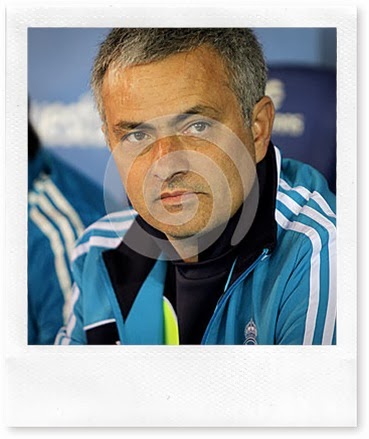
jose-mourinho-real-madrid-spanish-league-match-espanyol-estadi-cornella-may-31149309

Jose Mourinho tried playing football as a young man, but soon realised his shortcomings. From Chelsea to Real Madrid, he has achieved outstanding success as a manager.

2. Know your talent

At the World Cup, you may see appalling performances from players who consistently excel for their clubs when fulfilling very different duties.

Talent is meaningless unless it is deployed in its most fitting context. So, knowing the strengths of your employees and matching them to the right roles will extract optimal performances from them.

thierry-henry-23108763

Thierry Henry was an ordinary player until Arsene Wenger converted him from a winger to a striker. With Henry on the team, Arsenal was difficult to beat.

arsã-ne-wenger-caricature-editorial-use-29928701 

3. Press the right buttons

Managers must act quickly to gauge the people they are working with.

If you survey those who played under Brian Clough, they would offer conflicting narratives. Some say Clough was avuncular and caring, others that he was an intimidating tyrant.

Neither was true – he had just simply worked out how to press the buttons of different characters.

Indeed, the modern boss must be versatile with a flexible toolkit to bring the best out of each talent. The hammer cannot be your only tool.

4. Promote self-belief

If we look at our own careers as employees, most of us will say our most productive and enjoyable period was when we worked for a manager who had confidence in us.

Wenger summarised the galvanising effect this relationship has: “All great successes, all great lives, have involved the coincidence of aptitude, talent, but also the luck of meeting people who have believed in you. At some point in your life, you need someone who will tap you on your shoulder and say, “I believe in you”

As a manager, if you want to see your company succeed, you have to learn to take a leaf from football’s playbook.

5. Draw the line

A lesson to learn: You can be friendly, caring and kind but you are their boss, not their personal friend.

The company is a place for people to earn income and build their career. Very few will let friendship stop them from earning a better salary or taking advantage of better career prospects with another employer. That is their right.

So, treat employees not as friends, but as talents.

To retain people, organisations can use two different approaches concurrently; award incentives and award challenges.

Your top performers may still leave one day because other companies will also offer them great deals.

When that happens, acknowledge their contributions and let them move on – just as in football.

football-tactic-12174384