Showing posts with label football. Show all posts

Friday, September 20, 2013

FOOTBALL AT THE OFFICE

Extracted from “The Star – 20th Sept 2013”

A friend lamented that an employee he has treated very well recently jumped ship to a competitor and in the process, badmouthed the company and even tried to poach another employee.

   Knowing he is a fan of Arsenal FC, I comforted him that he was not alone in feeling betrayed, as in the world of English football, there are many such cases of players leaving for other clubs.
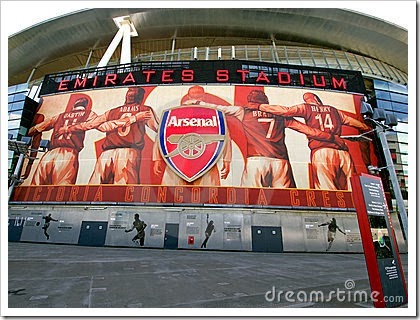
arsenal-legends-victory-comes-harmony-22929175

   Take Robin Van Persie last season, Arsenal stood by him for more than four seasons when he was injured but the moment he had one successful injury-free season, he left for Manchester United.

   Indeed, the experiences of the English Premier League can have many lessons for managers and bosses. Here are some of the lessons from the pitch:

1. Better as manager

There is no relationship whatever between functional expertise and managerial ability.
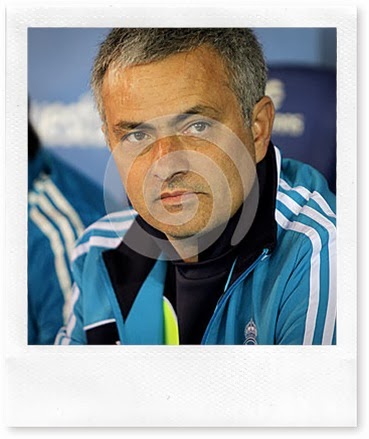
jose-mourinho-real-madrid-spanish-league-match-espanyol-estadi-cornella-may-31149309

Jose Mourinho tried playing football as a young man, but soon realised his shortcomings. From Chelsea to Real Madrid, he has achieved outstanding success as a manager.

2. Know your talent

At the World Cup, you may see appalling performances from players who consistently excel for their clubs when fulfilling very different duties.

Talent is meaningless unless it is deployed in its most fitting context. So, knowing the strengths of your employees and matching them to the right roles will extract optimal performances from them.
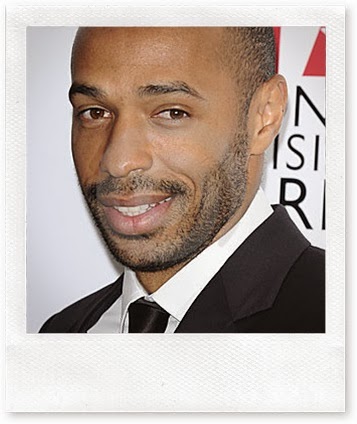
thierry-henry-23108763

Thierry Henry was an ordinary player until Arsene Wenger converted him from a winger to a striker. With Henry on the team, Arsenal was difficult to beat.
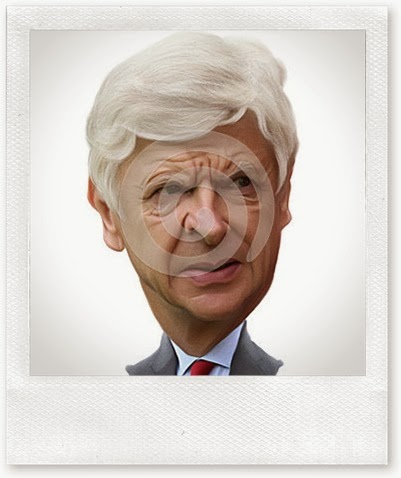
arsã-ne-wenger-caricature-editorial-use-29928701 

3. Press the right buttons

Managers must act quickly to gauge the people they are working with.

If you survey those who played under Brian Clough, they would offer conflicting narratives. Some say Clough was avuncular and caring, others that he was an intimidating tyrant.

Neither was true – he had just simply worked out how to press the buttons of different characters.

Indeed, the modern boss must be versatile with a flexible toolkit to bring the best out of each talent. The hammer cannot be your only tool.

4. Promote self-belief

If we look at our own careers as employees, most of us will say our most productive and enjoyable period was when we worked for a manager who had confidence in us.

Wenger summarised the galvanising effect this relationship has: “All great successes, all great lives, have involved the coincidence of aptitude, talent, but also the luck of meeting people who have believed in you. At some point in your life, you need someone who will tap you on your shoulder and say, “I believe in you”

As a manager, if you want to see your company succeed, you have to learn to take a leaf from football’s playbook.

5. Draw the line

A lesson to learn: You can be friendly, caring and kind but you are their boss, not their personal friend.

The company is a place for people to earn income and build their career. Very few will let friendship stop them from earning a better salary or taking advantage of better career prospects with another employer. That is their right.

So, treat employees not as friends, but as talents.

To retain people, organisations can use two different approaches concurrently; award incentives and award challenges.

Your top performers may still leave one day because other companies will also offer them great deals.

When that happens, acknowledge their contributions and let them move on – just as in football.

football-tactic-12174384

Sunday, June 2, 2013

The Nearly Men


crest

In the space of a year, Borussia Dortmund have gone from German league and cup Double winners, to lose the UEFA Champions League final and three of their best players – all while failing to win a single trophy.

   It is the curse of the over-achieving club. After Dortmund’s incredible 5-2 demolition of Bayern Munich in last year’s DFB-Pokal final, they lost Shinji Kagawa to Manchester United. The Japan star had been absolutely sensational that season.

220px-Kagawa_Shinji,_Japanese_footballer_3-vert

   And now, barely a week after that heart-breaking UCL final defeat, they are set to lose their two best players, Mario Goetze and Robert Lewandowski – both to Bayern, their biggest rival in the Bundesliga. Talk about a kick in the teeth.

Robert_Lewandowski_2010-vert

   It’s a sad reality for clubs like Dortmund. Call it flying too close to the sun, if you will. Play too well, and the big boys – Bayern, United, Real Madrid, Barcelona, etc. – will always start looking at your prized assets.

   Here are some other over-achievers in recent years who have paid the price:

Bayer Leverkusen

Bayer 04 Leverkusen logo.svg

Boasting players like Michael Ballack, Lucio, Ze Roberto, Yildiray Baturk and a young Dimitar Berbatov, Leverkusen were on course for a Treble during the 2001/02 season.

262px-Michael_Ballack_2009_cropped-tile

   In the end, they missed out on the Bundesliga title by one point, capitulated in the DFB-Pokal final and Zinadine Zidane swung his magical left boot to win the Champions League final for Real Madrid. Ballack and Ze Roberto left for Bayern the next season. while other stars of that team left one by one over the next few seasons.

F.C. Porto

FC Porto.svg

Unlike Dortmund and Leverkusen, Porto actually won the Champions League trophy in 2004. But the following season, they wouldn’t just lose Ricardo Carvalho and Paulo Ferreira, but also manager Jose Mourinho.

   The talented side would later on lose their entire midfield base – Deco, Maniche, Costinha and Pedro Mendes. It was only in 2011 that Andre Villas-Boas revived their fortunes by winning a league, cup and Europa League treble. Even then, the club would lose AVB the following season, along with star players Hulk, Radamel Falcao and Joao Moutinho in the next two seasons.

Falcao_Presentación_Atletico_(cropped)150px-PedromendesChelsea_Deco250px-João_Moutinho_Euro_2012_01

Aston Villa

A badge with a claret border, light blue background and yellow lion rampant facing to the left with a small star slightly above an outstretched leg. AVFC is atop the lion in claret writing with "Prepared" written underneath.

Under Martin O’Neill, Aston Villa were becoming a dark horse in the Premier League title race. They finished sixth in the league for three consecutive seasons with a talented young side that included James Milner, Ashley Young, Stewart Downing, Gareth Barry and Gabriel Agbonlahor.

260px-Jamesmilner09-horz

   The club even reached their first cup final in ten years, the 2010 League Cup final, which they lost to Manchester United.

   Now, Agbonlahor is the only star left in the side, with the rest all snapped up by the big boys. The sale of James Milner to Manchester City proved the final straw for O’Neill, who resigned in 2010.

Arsenal F.C.

Arsenal FC.svg

It’s unfair to call Arsenal “over-achievers”, but they have nevertheless found themselves in a similar position to Dortmund over and over since their 2006 Champions League final defeat by Barcelona.

   European powerhouses have been regularly signing their stars – from Thierry Henry in 2006 to Robin van Persie last year. In between, they’ve also lost Mathieu Flamini, Alexander Helb, Cesc Fabregas, Gael Clichy, Emmanuel Adebayor, Samir Nasri and Alex Song. Imagine what they would have achieved had even half of those players stayed!

2012_2013_-_25_Alex_Song-horz